
In the world of performance cars, wagons rarely get the spotlight. But Genesis is looking to change that with its eye-catching Wingback Concept, a muscular and luxurious wagon that has sparked major excitement since its reveal. And according to Genesis president and chief creative officer Luc Donckerwolke, this isn’t just another show car. He wants to build it, and he believes the market is ready.
During recent discussions, Donckerwolke explained that even though high-performance wagons are seen as niche products outside of Germany, their popularity in the U.S. tells a different story. Models like the BMW M5 Touring and Audi RS6 Avant have shown that American buyers do want powerful, stylish wagons. And Genesis wants to join that club.
A Wagon Built on a Proven Platform
One of the biggest reasons the Wingback has a real chance at production is its engineering foundation. The concept isn’t built from scratch. Instead, it borrows most of its structure from the existing Genesis G90 sedan.
Both the Wingback and the previously revealed X Gran Coupe concept share the G90’s:
- 125.2-inch wheelbase
- 207.6-inch overall length
- Suspension mounting points
- Seating layout and gas tank location
By keeping all the important hardware the same, Genesis can develop both models without the high cost normally required for brand-new body styles. According to Donckerwolke, all they need to do is add unique rooflines, side panels, and exterior styling to transform the sedan into something completely new.
This approach allows Genesis to create low-volume, special coachbuilt vehicles quickly and efficiently, a big part of the brand’s strategy moving forward. See more Photos
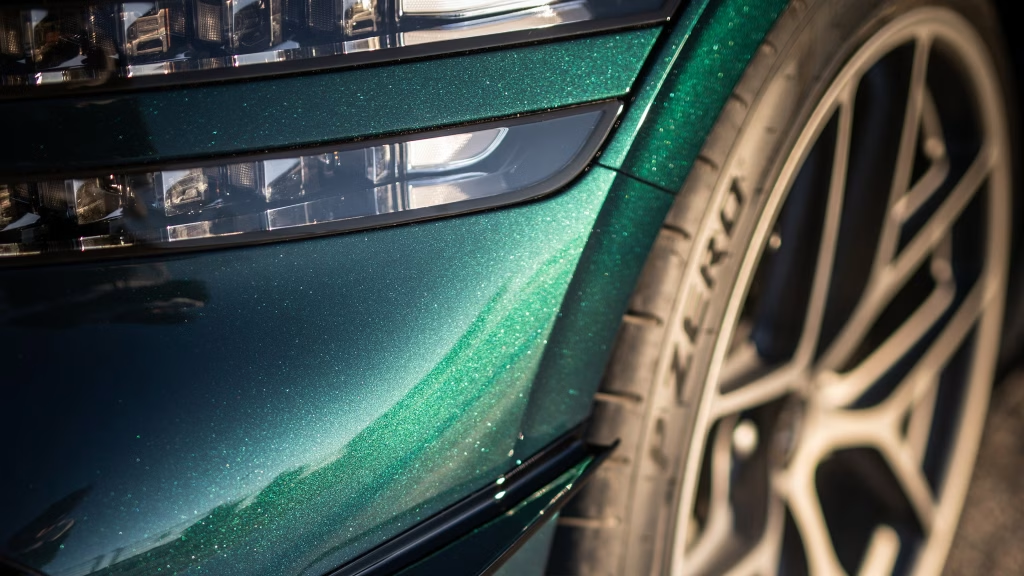
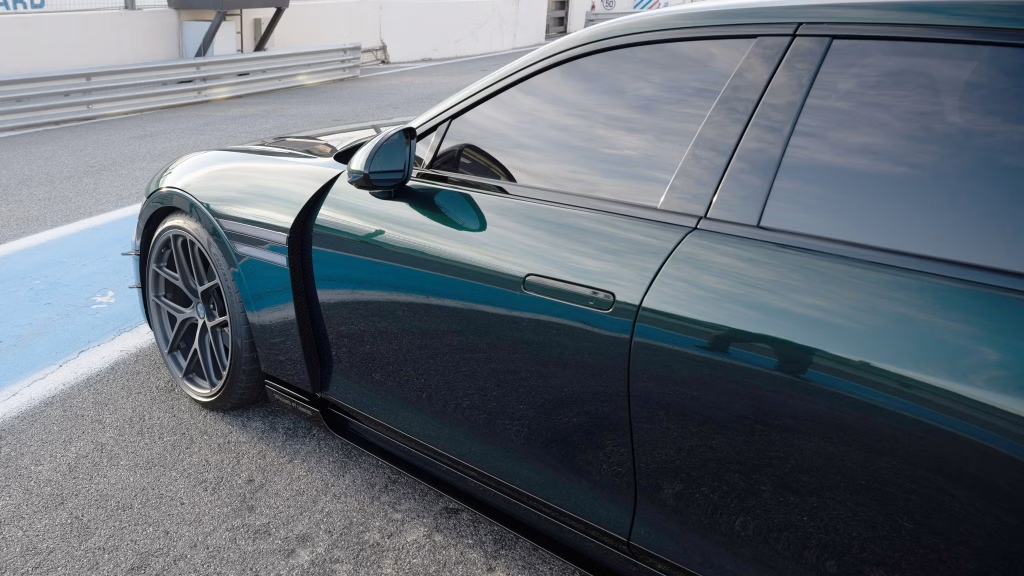
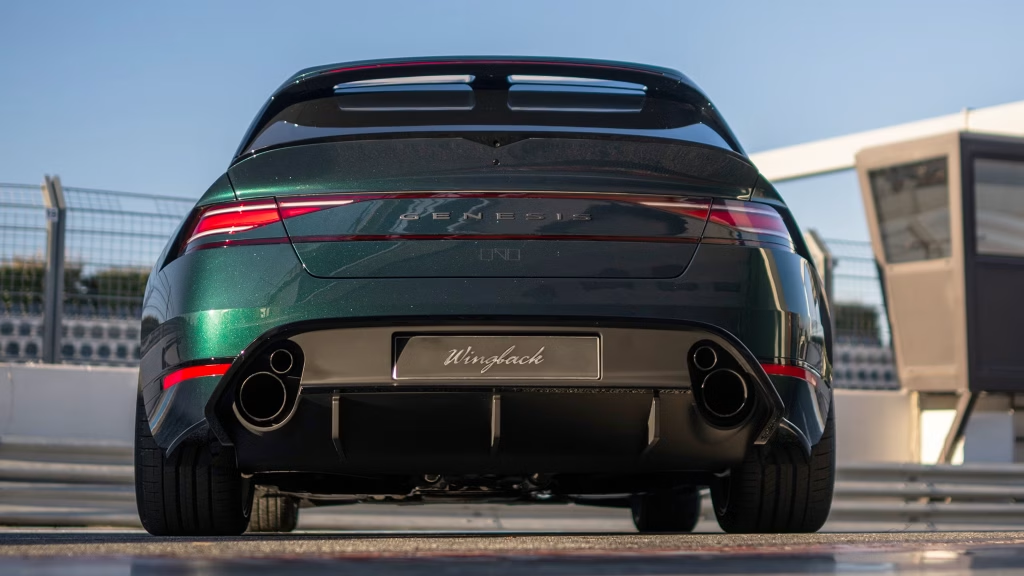
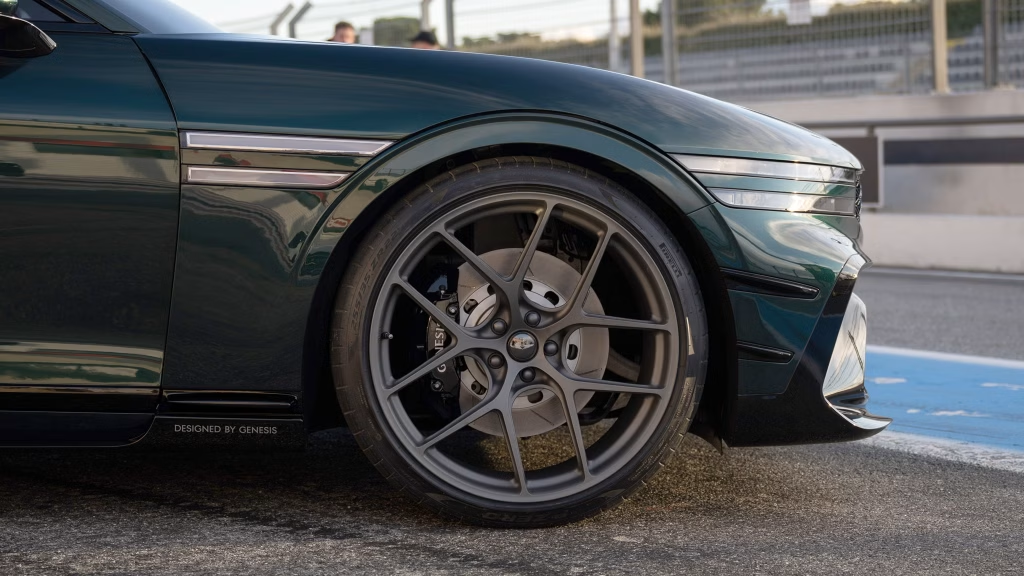
Genesis Engineering Team Says It’s Already Preparing
Manfred Harrer, who oversees Genesis and performance engineering for Hyundai Motor Group, confirmed that his team is already modifying the G90 platform to support high-performance Magma models. This includes the upcoming G90 Magma sedan, and likely the Wingback wagon and X Gran Coupe.
The upgrades include:
- A stiffer chassis
- Improved steering response
- New suspension components
- Better high-speed stability
- Focus on luxury-level quietness and comfort
This mirrors the work done on the GV60 Magma, showing that Genesis wants its future performance cars to deliver both speed and refinement.
Rethinking the Powertrain Strategy
Originally, the X Gran Coupe and its convertible sibling were intended to be electric vehicles, serving as halo models for Genesis’s move to become fully electric by 2030. But with EV demand slowing, especially in the luxury market, the company is shifting its thinking.
Now, upcoming performance models may use:
- High-performance plug-in hybrids (PHEV)
- Extended-range electric systems (EREV)
For the Wingback and X Gran Coupe, the starting point will likely be the G90’s powerful 3.5-liter twin-turbo V6 with electric supercharging. But to compete with German powerhouses like the Audi RS6 and BMW M5 Touring, Genesis will need much more horsepower.
Some insiders have even hinted that Genesis may be quietly developing a brand-new V8 engine specifically for top-tier Magma cars, which could end up under the hood of the Wingback.
More Than Just Performance: A New Design Philosophy
Although the GV60 Magma highlighted the brand’s ability to add dramatic styling and more power, Donckerwolke insists that Magma isn’t just about aggression and bright orange paint. He says the Wingback and X Gran Coupe represent a bridge between Magma performance cars and Genesis’ One-of-One program. This special division builds custom luxury vehicles for exclusive clients.
These new models would blend handcrafted design with performance engineering, giving Genesis the flexibility to offer unique shapes, such as wagons and coupes, without massive investment.
Are Wagons and Coupes Still Worth Building? Genesis Thinks So
Donckerwolke is also confident that the market will swing back toward wagons and specialty cars as high-performance SUVs start to feel overdone. Wagons offer similar cargo space but better handling, thanks to their lower center of gravity and lighter weight.
He believes buyers will soon want something different from the sea of SUVs currently dominating luxury showrooms. The Wingback and X Gran Coupe could fill that gap.
Could the Wingback Actually Be Built? Absolutely, If Enough People Want It
While it’s still labeled a concept, everything about the Genesis Wingback has been designed with production in mind. The engineering works. The platform is ready. The team is motivated. The brand sees a real opportunity in the market.
As Donckerwolke put it, if customers show interest, Genesis is ready to move quickly.
In other words: ask for it, and Genesis might just build it.
FAQs
Is the Genesis Wingback wagon going into production?
The Wingback is still a concept, but the company’s top designer says they want to build it. If enough people show interest, it has a good chance of becoming a real production car.
Why is the Wingback wagon getting so much attention?
People like it because it looks sporty, powerful, and different from most SUVs on the road. High-performance wagons are rare, so the design stands out.
What is the Wingback wagon based on?
It’s built on the same platform as a large luxury sedan. This makes it easier and cheaper to turn the concept into a real car.
What engine might the Wingback use?
It will likely start with a powerful twin-turbo V6. Engineers may increase the power, and there’s a chance a new V8 could be used in the future.
Will the Wingback be electric?
The company planned electric versions at first, but slow EV demand changed that. The Wingback may use a plug-in hybrid system or a strong gas engine instead.
How is the Wingback different from a normal wagon?
It’s designed to be sporty, fast, and luxurious. It has a wide, aggressive body and performance-focused engineering.
Why does the brand think wagons will become popular again?
They believe people are getting tired of big SUVs. Wagons can carry a lot, handle better, and feel more fun to drive.
How is the Wingback related to the X Gran Coupe concept?
Both are special low-volume models designed to mix luxury and sportiness. They share many parts to help reduce cost and speed up development.
What upgrades will the performance version get?
Expect a stiffer chassis, better suspension, sharper steering, and improved high-speed control. It will still stay quiet and comfortable.
Why can this concept be built faster than others?
Because most of the key parts like the frame, seating layout, and suspension points already exist on another model. Only the body panels and roof need to be changed.







Leave a Reply